

NeuroPALS
NeuroPALS
NeuroPALS is a development line within NeuraXplore that explores how AI, interaction data, and optional biosignal inputs can support more responsive learning pathways. It is designed to help educators adapt pace, structure, and support earlier, with human oversight and without requiring a diagnostic label.
Surface vs depth
What educators see above the waterline
Scroll to peel back the surface view of grades and completion metrics and reveal the learning signals NeuroPALS is designed to surface beneath.
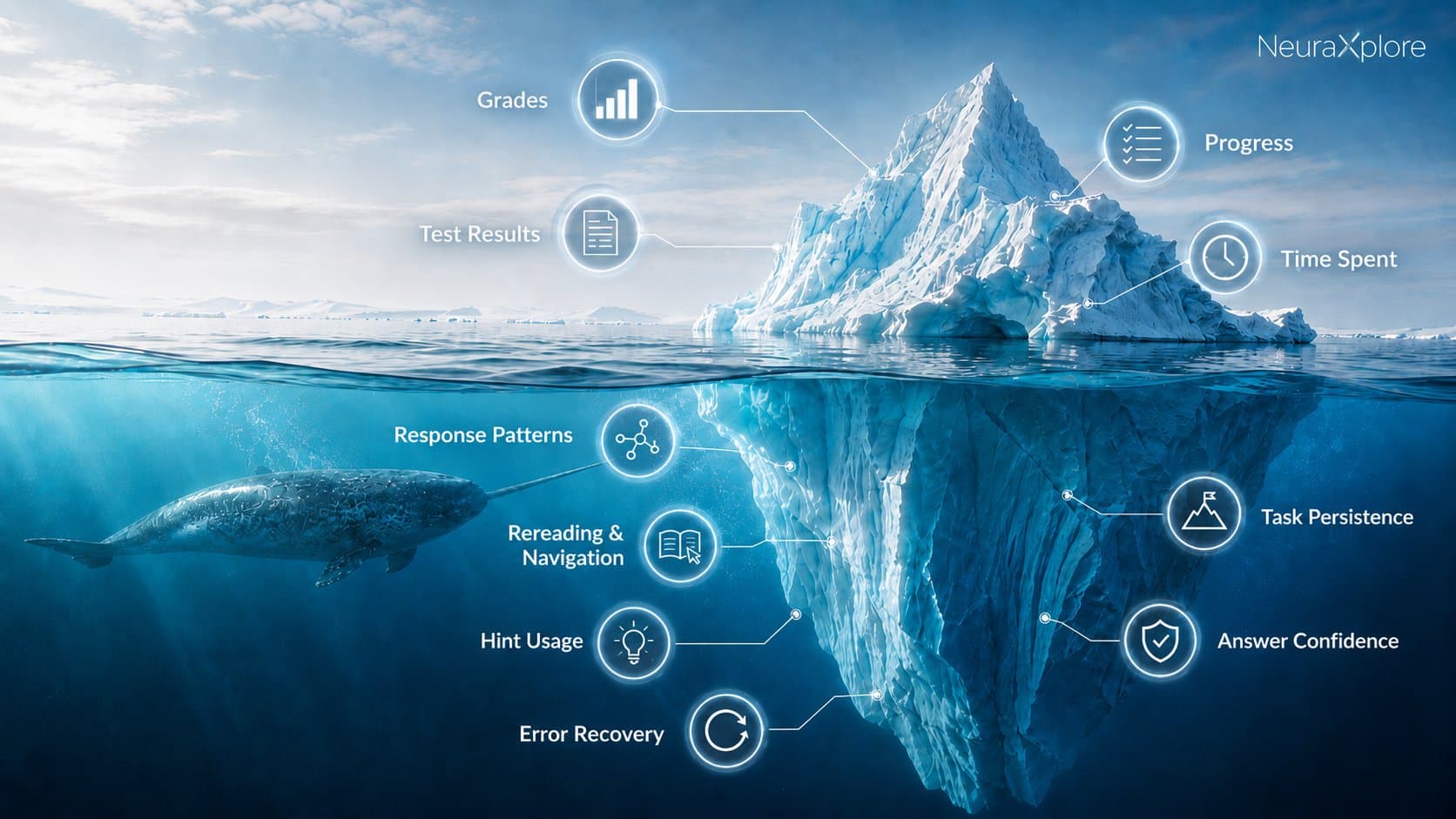
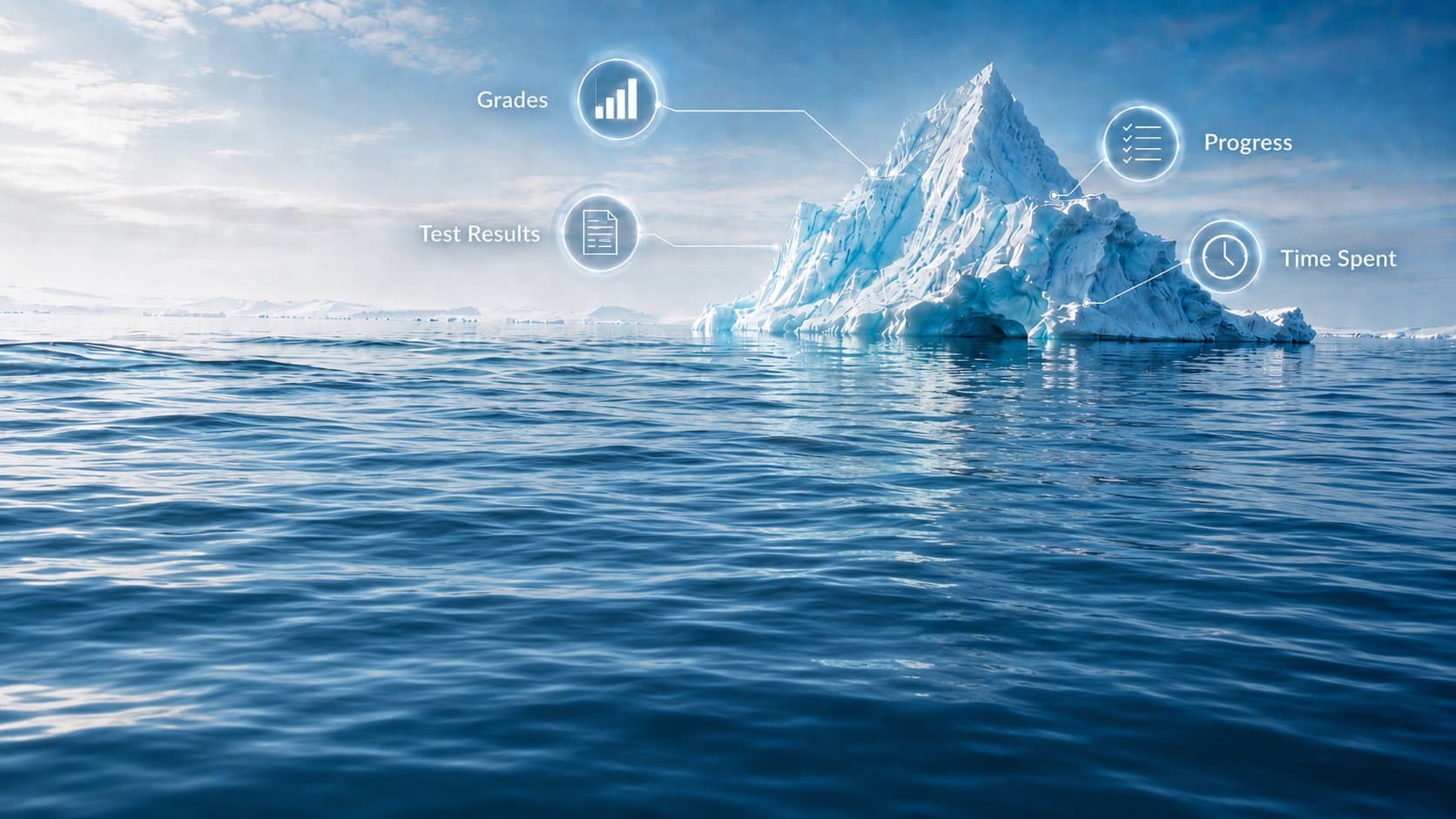
Without NeuroPALS
Grades, test results, progress, time spent
Why NeuroPALS
Technology should adapt to the student
NeuroPALS is being developed to build a trustworthy learner profile before adaptive support is applied at scale.
The vision
For too long, education has been uniform and static
NeuroPALS combines learning science, adaptive AI, and optional immersive modalities so support can meet students where they are, through low-pressure profiling grounded in how students actually learn.
Rigid structures can erode confidence long before formal support arrives, especially for students with attention, sensory, or processing differences.

The stress of uniformity
Traditional classrooms can misread waning attention, sensory overload, or cognitive frustration as lack of effort, which can erode confidence over time.
The wait for help
Formal support pathways can take time. NeuroPALS is designed to offer earlier, pedagogically framed signals that educators can review from early sessions.
Profiling first
Baseline signals before labels
NeuroPALS uses learning signals and, in controlled pilot settings, can be extended with webcam, eye-tracking, or EEG inputs. Outputs are intended to inform pacing and environment adjustments, not to diagnose or label learners.
How it works
The adaptive loop
NeuroPALS is designed around a Sense, Analyse, Adapt loop aligned with engagement and cognitive load proxies, not item scores alone.
Gather learning signals responsibly
Using interaction data and, where enabled in pilot deployments, non-intrusive sensor inputs such as eye-tracking or pupillometry, NeuroPALS aims to estimate attention focus and cognitive load during learning tasks.
Interpret signals with pedagogical context
NeuroPALS interprets task-linked signals alongside educational context to suggest when a learner may be distracted, taxed, or approaching overload. These are support indicators for educators, not clinical assessments.
Adjust the experience in the moment
NeuroPALS is designed to suggest adjustments to pace, complexity, and stimulus level in the learning environment, subject to educator review, to support engagement and reduce unnecessary overload.
Impact
What changes in practice
NeuroPALS is being developed to support differentiation for sensory load, attention fluctuation, and processing differences without lowering academic expectations.
Beyond labels
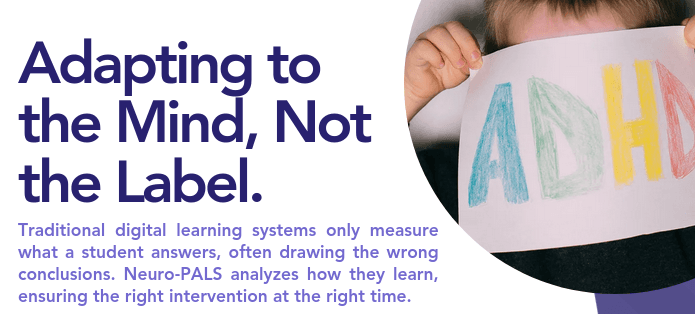
Adapting to learning patterns, not labels
Traditional systems often infer ability from answers alone. NeuroPALS explores how learning behaviour and task-linked signals can help educators intervene earlier, before frustration becomes a pattern.
1 in 5
students have a learning difference
Many remain undetected for years without timely, pedagogically framed support.
Support for diverse learners
Autism and overstimulation
Structure and clarity instead of forced repetition when errors may stem from stress or overload.
ADHD and attention
Varied pacing and chunked content when focus drops during sustained tasks.
Dyslexia and processing
Presentation adjustments intended to reflect underlying ability when reading is the bottleneck.
Illustrative NeuroPALS adjustment view
Pace and load
Adjustments to pace and load
When cognitive load appears high, NeuroPALS can suggest lowering noise, simplifying visuals, or breaking tasks into smaller steps. The goal is active learning tuned to state, not passive scrolling.
Immersive learning
Environments that respond to learner state
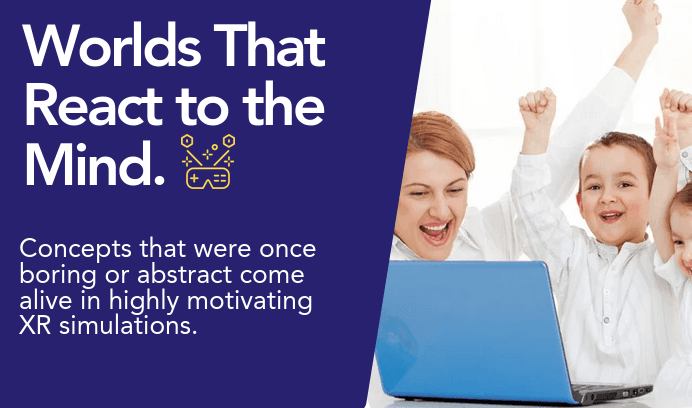
Where immersive modalities are included in a deployment, NeuroPALS explores XR-supported experiences that can respond to learner engagement and load signals, subject to educator oversight.
XR Mode
Optional
deployment-dependent
Early pilot work
NeuroPALS is currently being piloted at Novo College, with a focus on career orientation (LOB) and Dutch/NT2. The pilot explores how learning signals can support educator insight beyond language barriers, with institutional oversight.
Audiences
Who benefits
Less frustration. Higher motivation. Clearer support.
NeuroPALS aims to reduce guesswork in learning by supporting environments that respond to attention, load, and pacing needs, while keeping educators in the loop.
Actionable insight. No added busywork.
NeuroPALS is designed to surface session-level learning signals educators can use to support differentiation, without replacing professional judgment or requiring a separate assessment for every student.
Trust
Science-informed design. Policy-aware deployment.
Signals in the Sense, Analyse, Adapt loop are intended for pedagogy: attention and pacing proxies, not clinical labels. Early pilot work at Novo College is supported by documented governance and EU AI Act positioning for institutional review.
Educator in the loop
AI recommends. Teachers decide what learners see.
- 1
Sense
Task-linked proxies can surface engagement and load patterns on an educator-facing view. They are not presented as diagnosis or grading.
- 2
Analyse
The adaptive engine proposes pacing, modality, or environment adjustments grounded in learner profiles and session context.
- 3
Adapt
Faculty approve or adjust before changes reach the student. Nothing is applied to learners without a professional in the chain.

Pseudonymised data, edge processing where possible, GDPR-aligned encryption, and EU AI Act positioning, without high-risk emotion recognition as a product output.
Full compliance postureWhat makes NeuroPALS different in the classroom
Evidence-led proxies
Human-factors and cognitive-science research inform attention and load indicators intended for learning contexts, not clinical screening.
Intervene before disengagement
Multimodal signals can trigger suggested environmental adjustments while the learner is still engaged, rather than after prolonged failure.
Deploy your way
Schools can start with lightweight laptop and webcam deployments, with optional richer sensor tiers where infrastructure and governance allow.
Pedagogy, not labelling
Outputs support mentoring and differentiation. NeuroPALS does not classify emotions for high-risk use or assign stigmatising learner categories.
Get started
Start with a trustworthy learner profile
NeuroPALS is designed to build the baseline that can inform PALS Cortex content design and classroom adaptation with educator oversight.